

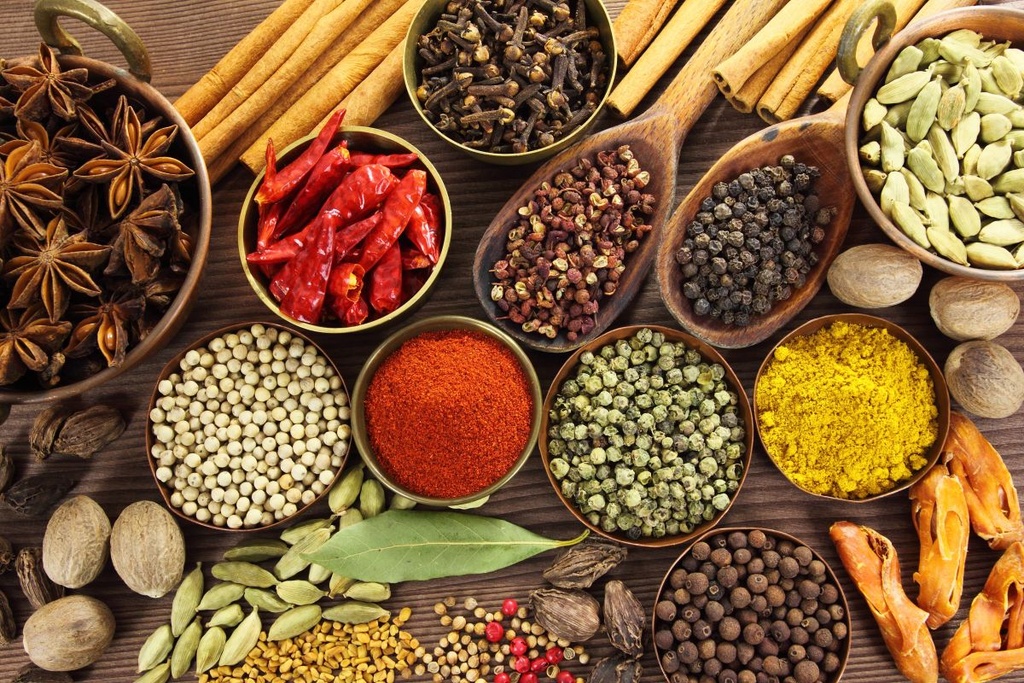
India is often called the "Spice Bowl of the World", producing nearly 75% of the world's spices. From colorful farms to international kitchens, the journey of Indian spices combines traditional farming with modern technology. As of 2026, the Indian spice industry has reached an estimated value of $9.58 billion, driven by a strong commitment to quality and farm-to-fork traceability.
Indian spices are not only used for flavor but also for their powerful medicinal properties. They contain natural bio-active compounds that support health and wellness.
| Spice | Key Bio-active Compound | Primary Health Benefits |
|---|---|---|
| Turmeric | Curcumin | Powerful anti-inflammatory and supports joint and brain health. |
| Black Pepper | Piperine | Improves nutrient absorption and boosts metabolism. |
| Cumin | Thymol | Stimulates digestive enzymes and helps in weight management. |
| Cardamom | Terpenes | Helps regulate blood pressure and freshens breath. |
| Cinnamon | Cinnamaldehyde | Supports heart health and regulates blood sugar. |
| Ginger | Gingerol | Relieves nausea and helps fight respiratory infections. |
The journey begins with farmers following Good Agricultural Practices (GAP). High-quality seeds are selected and crops are harvested at the correct time to ensure maximum flavor and nutritional value. For example, turmeric is harvested 8–9 months after planting when its leaves turn yellow.
To meet international food safety standards, modern facilities use advanced processing technology.
Before spices are exported, they undergo strict testing and certification.